Friday, January 10, 2014

The Liberation of a Scientist


At the end of our science investigation, we took the time to think about what we had learned about being a scientist. The children were asked, "How do scientists learn new things and know they are true?" They responded by building collages. They all captured interesting nuances about the workings of scientists. The collages explored a variety of ideas.
  • The more you know the more you wonder.
  • Scientists depend on collaboration and communication to make their experiments as reliable as possible.
  • Scientists repeat their experiments many time in order to be sure they are right.
  • If everyone adds their little bits of knowledge together it creates a much more solid body of knowledge.
  • Working in an intentional and organized way helps you to see your results and trust them.
Here is a peek at the class' visit to one collage and the conversation that accompanied the visit. It was such a beautiful way to look at learning. Learning is liberation!
Working with other materials ends up producing such rich conversations between the class as we try to understand the thoughts represented by the creator and add connections and idea of our own.

047.JPG046.JPG

Sophia: This one is… there is this scientist, here he is [points underneath the purple feathers to a clear glass rock resting underneath] and he has heard these rumors on the street and he is trying to figure out what to do with them … if he should test them or not. So it is like he is in a cage.  [She drops the purple feathers to trap the stone.]

Teacher: Sort of trapped by not knowing?

Sophia: Yeah, but then he finds a way to test is and then he has some freedom. [The trail of blue glass leading out of the cage.]

Jude: So this is the rumor?

Sophia: No, this is the rumor [points to the ring of glass tiles surrounding the scientist rock].

Stella: So what happens at the end when he solves it? What happens to the rumor?

Sophia: It goes away for HIM because he tested it.

Lila: Now he knows that it is either true or not true.

Mallory: So it went away.

Teacher: [Pointing to the crystals at the end surrounded by white feathers] So over here this represents all of the freedom he feels because he is no longer trapped by not knowing?

Lila: I have an idea for next time. Maybe on these stones leading out, you could make them darker and then lead into lighter.

Teacher: Lila, do you mean that at first his knowledge is dark and he doesn’t really know but with each step he starts to understand better so it gets lighter?

Lila: Yes.

Dylan: I think it should be lighter and then darker because  your mind is first clear and then you get all these things in your head.

Teacher: Like the more you figure out the more you wonder? That is interesting. I can see it both ways. I can see that at first you are confused but then the more you experiment the more clear it becomes.  Maybe we need to think of a way to represent both of them happening at the same time. You get more clear with one question but you get more confused with other questions and ideas connected to it.

Mallory: Maybe it does different things to different people.

Wednesday, December 18, 2013

Myth Busters to the Rescue


While we truly value the opportunities for children to construct their own knowledge and find their way to answers, we recognize that there are, in fact time when it is time to loan them knowledge. One of my big questions during this investigation of germs has been, "Do I send these children out into the world believing that hand washing is not effective just because we were not able to get to a point of controlling all of our variables enough to get results that match the tons and tons of research that has been done on the topic?" I was especially worried because of the health and safety aspects of this dilemma. We decided that this was the perfect opportunity to share more information with them. We decided to watch Myth Busters “Down and Dirty” episode testing the effectiveness of paper towel drying vs hand dryers in removing germs during the hand washing process. We decided to show the episode after the work of the children was finished, so that it wouldn't take the wind out of their sails by giving them too many answers. We also felt that showing it towards the end of our investigation would leave them with an increased sense of what great lengths scientists go to in order to control all of the variables necessary to be confident about the results after they had already developed their own understanding for the need to do so. They would see professionals in action with all of the facilities and materials necessary. We felt it would actually help to leave them with an understanding of their path forward on their own scientific journeys, knowing that there were new frontiers for them to conquer.
Here are pieces of their conversation following the episode. It may be a bit hard to follow without all of the background knowledge about our experiments, but I'm sharing so that people can see just how hard the children are thinking about what might be giving them strange and unexpected results.
_________________________________________________________________________________
What did you notice about the way these scientists worked?

Did you see anything that would help us understand hand washing better?

Stella: I noticed that you have to be very careful. AND washing hands IS sanitary! They tested it and it came out clean.

Jude: When they swabbed they put it in a liquid.

Mallory: I think in testing, like if the paper towel dispenser was dirty enough to make a difference, I think that could help us because I know that we took out the paper towels but it could have just been the area AROUND the paper towels that made a difference. And the liquid … I think our results will turn out different because we didn’t use the liquid. We just swabbed our hand and swabbed the dish. Maybe the liquid makes sure they stay on the swab…

Jude: Plus they had a warmer thing. We kept our germs for like 42 days.

Teacher: Did you notice they kept their dishes in an incubator?

Arthur: What is an incubator?

Teacher: It keeps things warm.

Sam: Maybe the person who swabs should wear gloves like the person in Myth Busters did.

Sophia: If you don’t wear gloves, the germs could just travel from your arm to your hand and down into the petri dish.  If you are holding the dish like this, they could sneak off your hands and into the dish. We should test… we should take a petri dish and wave it in the air for like 20 seconds and then we should take another petri dish and just hold it in the air [still] for 20 seconds and see which one is germier.

Class: Yeah! Do we still have petri dishes?

Mallory: In some of our experiments, there were different people holding the petri dishes and the swabs and they weren’t wearing gloves.

Teacher: Yeah sometimes three different people were holding the stuff.

Lila: They would have to be sterile gloves.

Mallory: I know that we opened the swabs on the end without the cotton, but the germs could have gotten off our hands on that end and climbed up onto the swabs that way because we didn’t have gloves. I’m really worried about the gloves now.

Arthur: You know how the petri dishes were closed but they weren’t taped? And you know how loose the lids were? When they were being transported, germs from all over could get into the petri dish. It might be germs from anywhere.  Did you get the petri dishes mailed? The envelop germs might have gotten in.

Teacher: They didn’t grow any germs until we swabbed. If they have been infected from the envelope, they would have started growing germs before we put anything in them. ..

Arthur: Then we did something wrong!!!

Stella: What did we do wrong?

Mallory: I KNOW we must have done something wrong because they had NOTHING growing when they washed their hands with soap. It probably is the gloves or the liquid.

Arthur: That was a public bathroom.

Dylan: I think maybe they used different soap.

Lila: Like anti-bacterial

Arthur: In public bathrooms there is  anti-bacterial soap.

Class member: They didn’t use foam soap… we use foam soap.

Teacher: Did you notice how many people they tested?

Stella: I wrote down, “They make sure they are right!”

Class member: They said 16 people for both ways.

Stella: They make sure they are right!

Mallory: I also wanted to say that they had cleaned the bathroom or made their own bathroom. It made me feel like the air in our bathroom might have been dirty.

Teacher: They made it fair. Did you notice how they made the germs fair on everyone’s hands? We’ve had the discussion before about how to make sure the germs were fair on the test subjects’ hands. We tried having people rub their hands together to try to make it even.

Tally: They sprayed this non-harmful germ.

Teacher: They sprayed two times on each person.

Lila: On the front and the back of their hands.

Teacher: That’s how they worked it out. We’ve constantly been talking about, “What if her hands are more germy than your hands? We can’t compare them.” They made it fair.

Lila: We should test everyone in the class.

Sam: If you do the pushing the soap yourself or the faucet yourself, that might be more like a real hand washing experience if you did it yourself.

Jude: I think I found something that THEY did wrong. I don’t think they planned the amount of time to swab.

Lila: And they didn’t plan an amount of time to dry their hands.

Mallory: When they had the people washing their hands, I heard them count to three.

Teacher: Yeah, I wonder. It is hard to see exactly how they did it because we don’t see everything. They edit and just show us little snips of all that happened. It was hard to tell exactly how they did everything.

Lila: Maybe they did plan it out and we just didn’t see.

Teacher: Maybe that could be a questions we add to our list to ask the expert. “How do you make sure your swabbing is fair?”

Thursday, November 21, 2013

Follow Up Experiments

 
After observing our petri dishes for days, we continue to be baffled. Why do we consistently grow more germs in the samples of the washed hands than the unwashed hands? The children created a list with over twenty reasons they THINK we could be getting strange results. They've developed lots of follow- up questions from,  "Did we treat the perti dishes correctly?" to "Does it matter how long you rinse your hands?"
 
Some questions have been answered over time and through other experiments. The children are designing new experiments to answer some of the remaining questions.
 
Today we set into motion the one of the experiments designed to determine how to best grow cultures in a petri dish. They wonder if our lack of knowledge might be affecting our samples.This group is specifically asking, "Do germs grow best in light or dark?" in partnership with another group designing an experiment to test if germs grow best in warm or cold temperatures. 
 
I've struggled a bit with this science investigation because there are SOOOO many variables to control. It is very hard in my adult heart to feel like our results are accurate. But on the other hand, the greatest weakness of this medium has also been its greatest strength because I've never seen a group of children this young become so adept in thinking about all of the subtleties that are affecting our results.

Today as our atelierista, Anna, and I were watching the experiment and listening to the children's conversations, we were both struck by how sophisticated their thinking had become. They were thinking and planning so many subtle details to help control their experiments ... and not just because that's the way their teacher told them to do it. Sure I posed a few questions to help probe for deeper thinking, but all in all they were making their own decisions about how to run their experiments "fairly."

They decided ahead of time who would open the door, turn on the water, push the soap dispenser.
There was a person timing to make the washing more accurate.

We all became "checkers" to be sure the experiment was happening as planned.
Were we labeling the dishes correctly? Swabbing for a fair amount of time on each hand?
 

Swabbing on the dishes for the same amount of time?

 
"We wanted to test the same person for all of the petri dishes so that the germs are the same."
"But we didn't want to swab the same hand because the first time we swab we might remove a lot of the germs. That wouldn't really be fair."
"We're going to have the person rub their hands together before we start to even out the germs on their hands. Then we can swab the right hand for one dish and the left for the other."
"We wanted a clean and dirt hand for both the light and the dark, just to see how each one reacts. It will tell us more information."

A clean and dirty hand sample are in place under the light.

A clean and dirty sample are in place in the darkness of the filing cabinet.
Time will tell!

Time Machine in the Forest

The time machine has reemerged, but this time it is in the forest.
Groups get together to discuss.
"What might this forest have been like in dinosaur times?"
"What might this forest have been like for Native Americans before European settlers?"


Friday, November 15, 2013

Germ Comics

As we've been learning about germs, we've often found ourselves joking around with analogies as we compare bacteria or viruses with things familiar to our lives. We imagined comicsthat joke about the comparisons and give the reader a hilarious look into to world of microbes.

As we started to make the comics, it was very difficult to make them as well as we had imagined. (Have you ever tried to make a comic? I gave it a try and it is HARD!!! Much harder than I thought it would be.) Many of our funny conversations never even turned into comics. I am OK with that. I've decided that the power was in the comparison. The laughing and joking where one person builds off another person until we've created a very detailed scene is the place the real magic exists. If the comic never gets drawn by hand it is OK because it has already been drawn in the mind, the important work has already been done. The magic is in the conversation itself.

Here are some of the scenarios the children have imagined. I'm sure you can conjure up some funny mental images to accompany the humor.


Fact: The body has defense mechanisms to help keep germs out (wet eyes wash germs out, eye lashes catch germs, throat and mouth are wet to make germs slip down to the stomach, stomach acid kills germs, skin prevents germs from entering the body etc.)

Comic Scenario:
"It is kind of like the body has booby traps for germs!"
"I imagine it like Home Alone for germs! They try to get in the eyes and 'wahoooo' they are washed out with a giant title wave."
"Then they try to go in the mouth and they slide down the throat to a pool of acid."
"And they come out all beat up like 'yikes'... but then they decide to try to go in another way."
"The skin is like running into a brick wall and they smash all flat!"
"And then finally the germs get in the body and they are like, "Finally I made it!" Just in time for the white blood cell to come 'You are under arrest, sir!"


Fact: Bacteria help to break down dead plants and animals in nature.

Comic Scenario:
"It is a good things that they explained what they meant by 'break it down' because we might have thought it was 'break it down' like [begins to dance wildly]."
"Ha! That would be a funny comic."
"All these germs are at work having a dance party. 'Break it down.' But then the boss comes in an is like, 'What are you doing!?!?' "
"The bacteria are like, "Uh oh! We are so fired!!' "
"The caption at the bottom could say, 'Bacteria who misunderstood their purpose in life.' "


Fact: Bacteria use enzymes to further break things down into simpler liquids they can absorb for food.

Comic Scenario:
"It is kind of like making a smoothie."
"Yeah. Like an enzyme smoothie."
"No, it would be more like a rotten log smoothie."
"The enzyme is like the blender."
[In a commercial announcer voice] "Come try our new amazing enzyme blender! It turns anything into liquid... PERMINANTLY!"
"You see some bacteria sitting on a fence and they see a deer walk past and in their minds they see a nice tall deer smoothie made with their enzyme blender."


Fact: Germs spread and travel the world. They change as they go and by the time they get back to us, our bodies no longer recognize them.

Comic Scenario:
"There is this little germ with a suitcase and a passport!"
"He travels to Hawaii and gets a flower necklace. Then on to Japan and gets a sun umbrella."
"Then Russia for a fur hat!"
"Then he goes to Hollywood and gets a camera and sunglasses."
"He comes back with a French accent. 'Oui, Oui!' "
"By the time he gets back the cells in your body don't recognize him AT ALL, so he sneaks past the white blood cells."

Tuesday, November 12, 2013

Thinking about Time in the Forest

We go to the forest every week. It is so nice to have the time set aside to be in nature and take in the beauty each week. It feels slow and purposeful. Last year we did science work in the forest. This year I wanted to try to do more writing in the forest and decided I also liked having the dedicated time to think about our school wide umbrella topic of TIME.
 
I sent the children on a photo scavenger hunt. "Take pictures of things you feel are evidence of time passing in the forest."
 
Trees falling. Logs crumbling.

Water falling. New water coming.

Water splashing. Water flowing and smoothing the rocks. Leaves on the ground.

Small cave formed. Rocks broke.

Leaves change colors. 
We sat down at the beginning of our trip today to observe. "What is different today than it was last week? How do you know time has passed since last time we were here?"

"I hear fewer birds chirping."
"More bare branches."
"Way more leaves on the ground. They make lots of noise when we walk."
"Leaves are covering the creek. You can't even see the creek! Sometimes it is even making a dam."
"It is colder. We are dressed differently."
"The weeds are dying and turning brown."
"New water is falling down the waterfall."
"I'm sitting in a different place saying different things."

We think about our observations.
What changes in an instant? A minute? An hour? A day? A month? A year? What could our forest have been like back in dinosaur times?

"I think there would have been fewer rocks that were bigger. Over time I think they broke into pieces making more smaller rocks.
"I think there would have been a creek. The dinosaurs drank water and some lived in the water."
"I think there was a creek, just not THAT exact same creek."
"I think the grass was greener?"
"Say more about that."
"Well I think there was less pollution. There were no people to pollute, so everything was more colorful and healthy."
"I think things were more colorful back then because things fade over time. That was like the beginning of time, so it was pretty bright and colorful. Over time things have gotten old and faded."
"I think there were newer trees... actually I wonder if there were trees or if the trees were the same kind."
"I bet there was more undergrowth because there were less people to trample it. We weren't around to build houses and roads."
"The hiking path wouldn't exist."


Wednesday, October 23, 2013

Experiments of Their Own

The children have been designing and running experiments of their own based on questions that arose during our class experiment (which is far from over, by the way). They made careful plans and helped each other think critically about what might need to be changed to help their experiment be more valid. Ideas about treating all of the perti dishes in one experiment the same, wiping the swab for the same amount of time on each dish, deciding a standard procedure for various phases of the experiment all came up during our discussions. Mostly I love the that children are helping to bring these ideas to light rather than following directions their teacher gave them because their teacher said so. They are thinking carefully about how to make their experiments as valid as possible because THEY care.


Questions being tested included
 
Is dirt germy?
 
Are we more germy at different times of day?
 
Does hand sanitizing work?
 
How clean are tap water, rain water, creek water and condensation?
 
Does the length of time of hand washing influence the results?


Wednesday, October 16, 2013

See for yourself!

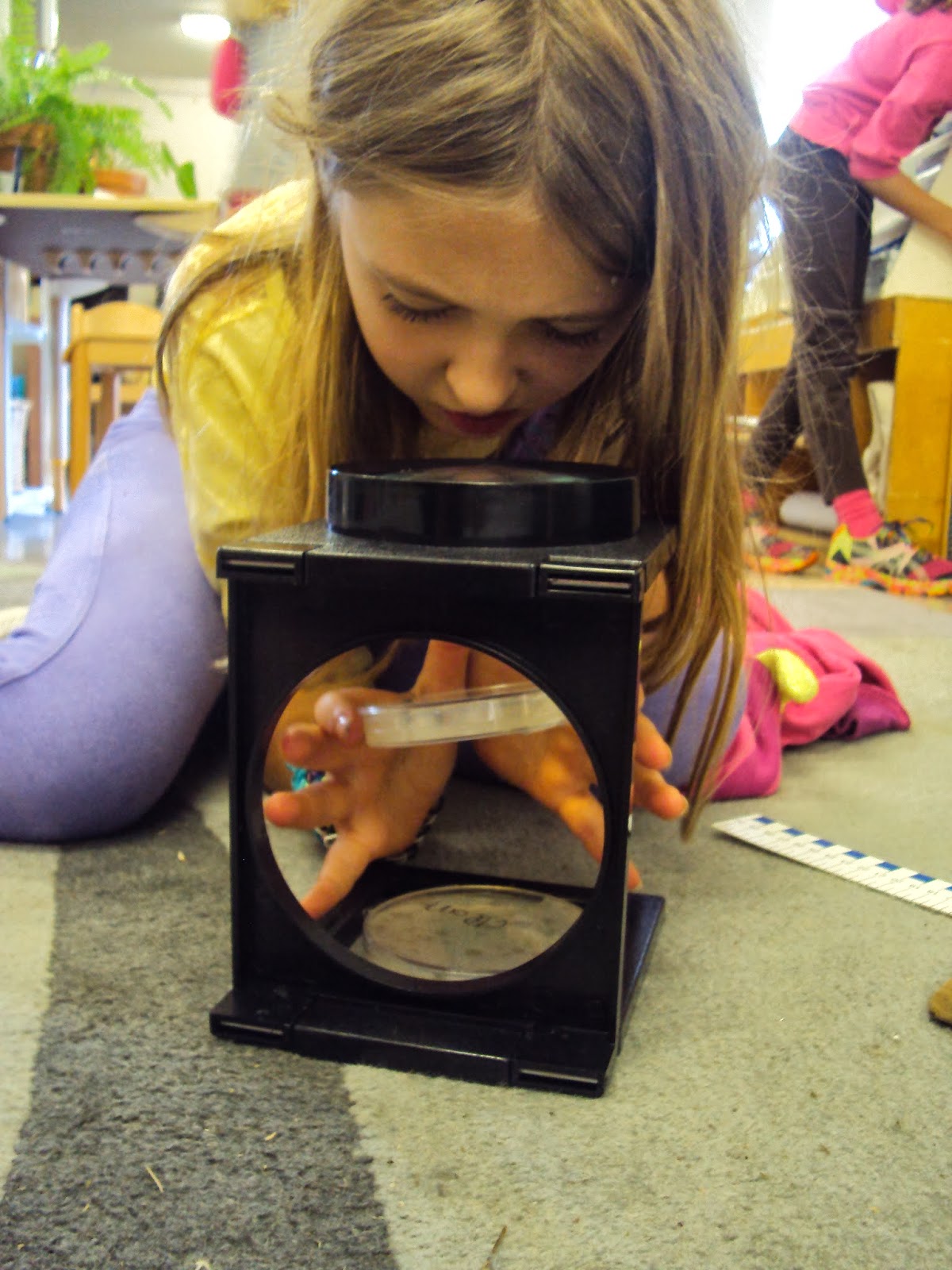
I decided to bring petri dishes into the classroom for the children to experiment with. I wanted to give more visibility to the invisible world of germs (and distract them from wanting to study animals for the millions year in a row for science). Turns out they LOVE the dishes and are anxious to test all sorts of things.

To kick things off and get the children used to using the materials and thinking carefully through the experiment process, I started by asking them to help plan an experiment that would help us determine if hand washing really works.
 
Some initial considerations the children thought of to make our experiment more reliable were
  • Needing a comparison-- we need to know what the hand was like before washing in order to know if washing really made any difference (Lila told us that was called a control test, which she had seen on Myth Busters)
  • The regular hand and the clean hand needed to be from the same person. Different people have different germs, so it wouldn't be a fair comparison. You need to know what THAT person's hand was like before and what THAT person's hand was like afterwards.
  • We would want to test the regular hand and the washed had close together to limit exposure to extra germs in between.
  • We would need to wash for 20 seconds (the recommended hand washing time)
  • The test subject did not touch the faucet, soap dispenser, doors etc. to avoid extra contamination (though later it was questioned if these were necessary since in real life you would actually touch all of these things when washing your hands).
 
We tested and waited for about a week for things to start growing in our dish. It was very fun to watch the children come back from the long weekend to see the newly visible growth.
 
"If you look close, you can see little hairs!"
 
"They look like grey dandelions!"
 
"Wait! The clean is dirtier than the dirty!!!!!"
 
See for yourself! The results are surprising!


* Note: The original science chapter I was reading in the Best Practices book shared this experiment. The author said he started off every year with this test and that the results were almost always this way with the washed had growing more than the dirty hand. I wasn't sure our test would be so surprising, but it turned out to fit with the author's experience. The discrepant event  has the children completely baffled; it has them RIGHT where I want them to be. Now they will get to put their brains to the test to solve the mystery. (P.S. I did run the experiment exactly as they had planned. No foul play by the teacher to trick them)

How can that be? Why does everyone want us to wash our hands? Why do doctors wash their hands before surgery? Should we stop washing our hands? Did something go wrong?

"I think you must have mixed up the dishes!"
"You probably accidentally used the same swab twice."
"I think it matters how long you wash."
"Maybe the soap is dirty. I don't think the soap is sterile."
"What if waving her hands in the air after she washed actually gathered more germs on her hands?"
"Maybe the dirt in the dirty dish keeps the germs from reaching the agar, so it can't grow as well."

Some children seem convinced that they should just never wash their hands again. Others feel like there is a problem and we need to get to the bottom of it.
"We may never know."
"We should leave this to the scientists."
"I think we are going to have to make a list of things we think could have gone wrong and test to rule each thing out."

Monday, October 7, 2013

Trout Tank: First Visit

We went over to the middle school to check out the trout tank for the first time. We will be back soon because the eggs are supposed to hatch!

http://mssciencessp.blogspot.com/2013/10/the-trout-eggs-have-arrived-they-are-so.html#comment-form

"No offense to the trout, but they look like what I imagine a germ to look like!"

"I was surprised how SMALL they were!"

"They looked like eyeballs."

"I did not think there were going to be THAT many eggs."

"I thought there were going to be MORE!"

"More than 200!?!"

"They were really cute! But I felt really bad for the rotting ones."

"Me too. But at least in the tank they have a much better survival rate."

"If our eggs match the usual results, we should have about .... 50 eggs hatch!"

"I want to see them hatch!"

"What will the actual survival rate be? Will it be more than 50? Less than 50?"

"I hope the non-fungus eggs survive. I hope no more get fungus."

"Once you get fungus, can you get rid of it? Is there medicine?"


Wednesday, September 25, 2013

Life Lessons From The Game

Playing “The Game” is not really about the game at all. It has been about thinking about how to interact and communicate when we are at odds with each other. How do you get along in the heat of the moment? How do we deal with disappointment? We stopped often along the way to uncover the life lessons we felt were being learning in our game playing. “What have you learned by playing the game that might actually help you in real life?”

The class discussions were full of gems of advice. Here are some highlights.

Dylan: It is possible to see good in something you thought was bad. For example, if you get a lot of the same card over and over it seems bad. But then if you see, it can also be good because you can trade those cards to get what you want.
Lila: You have to stay kind about it and you have to stay calm. You can’t be like, “HEY!!! WHY DID YOU DOOO THAT TO US!!!” and stay calm and be happy about it because maybe there will be some good to come out of it like Dylan said.

Mallory: You have to deal with bad things happening. Like if someone puts the robber on you, you just have to deal with it and not get really upset about it.

Sam: You should always remember the golden rule, especially the part that says that you should treat other people they way you want to be treated. So if you rob someone by the robber, you can either rub it under their noses and if you want someone to do that to you, well of course, keep doing it! But if you want people to say, “I’m sorry, it is not personal. We were just wanting to slow you down because you were in the lead!” That is OK because usually you would want someone to teat you like that.

If you’d like to read the whole conversation (my colleagues and I found it fascinating) I’ll include the transcript at the end.

Not long after these discussions, I found the ideas contained within them guiding my own life.

My family just recently bought our first house, so naturally is needs a bit of TLC. My husband had been working hard to spruce the place up before we move. He had been sanding the floors one day. He left the house and returned in a few hours to find the back door kicked in and the power cords cut and stolen from all of his sanders and power tools along with our fridge, stove and AC units. Talk about feeling deflated. “This is JUST what we need!” I thought to myself sarcastically as I drove home after hearing the news. As I sat evaluating my feelings, I began to hear the voices of my third graders ring in my memory.

“You have to deal with bad things happening. Like if someone puts the robber on you, you just have to deal with it and not get really upset about it.” I had a choice. I could either let this totally get me down and into a pity party or I could just acknowledge that I didn’t like what had happened and move on. Getting super upset wasn’t going to change the events; they had already passed. (And how funny was it that the context of disappointment in the game had also been a robber. Ha!)

“Don’t take it personally!” Did the thief know us? No. They were obviously desperate from whatever circumstances they were facing in their own life.  They weren’t against me personally.

“Stay calm and be happy because maybe some good will come out of it!” With an insurance claim we will likely be able to replace most of our stuff. It just might be how we afford a new fridge which we needed anyway. (OK, so that one didn't really end up working out, but it was a comforting thought in the moment. I'll keep a look out for other possible silver linings. )

The words of the children were empowering. Their ideas totally changed my outlook. It was one of those moments that teachers have from time to time where my eyes brimmed with tears as I reflected on what a privilege it is to work with children. They have a way of grounding me and continually bring fresh perspective to my eyes. Their advice was there to guide me just when I needed it.

The lessons we learned from the game really are lessons for life far beyond the classroom—lessons for their lives … and for mine.
____________________________________________________________________________
The following is a transcript of some of our conversations about the lessons the children learned while playing the game.
Teacher: “What lessons are we learning from the game?”
Jude: We need to work well with other people in life and we have to do that in the game.
Teacher: You all decided that the team that won the first game was so successful because of how well they worked together and how well they listened to each other.
Mallory: You have to deal with bad things happening. Like if someone puts the robber on you, you just have to deal with it and not get really upset about it.
Stella: You have to take care of your resources.
Dylan: You have to communicate clearly. It is also possible to see good in something you thought was bad. For example, if you get a lot of the same card over and over it seems bad. But then if you see, it can also be good because you can trade those cards to get what you want.
Lila: You need to save your resources for the things you really want. Don’t just spend them on little things you don’t care about. Save up to get the important things you really want. Also, sometimes you need to spend you resources before you lose them. It is better to spend them while you have them than to lose them and not get to spend them at all.
Sam: I learned that you should… if you put the robber on someone, then later they only have one resource left and they want to trade with you, that is one way to mend the relationship. But if you say no, that might make the relationship issue even bigger.
Teacher: Once a relationship has been hurt, you can mend it or make it worse depending on the decision you make after that. Do you think that could apply to real life, like with a friendship? You hurt someone’s feelings and you can either make things better or worse with what you choose to do next?
Class: Yes!
Mallory: You have to choose to be flexible. Like if two people on your team want to build a road and you don’t want to, you have to be flexible and just be like, “Well… Ok…”
Teacher: It wasn’t what I wanted, but OK.  In real life do you always get things that way you want it?
Lila: Like in voting for president. Maybe the person you voted for doesn’t get elected.
Stella: I’ll have to live with it for four more years.
Dylan: I don’t exactly know how to say it, but like when we disagreed about who’s turn it was to roll and I just let Arthur have the dice…
Teacher: Hmmm…. how would we put that. Maybe being generous? What happens when you are generous?
Lila: You get generosity back.
Tally: You get respect back.
Lila: Don’t let people know what you have. Like if you tell people in the real world how much money you have, they might come and steal it from you. But also in the game you shouldn’t tell people what you have.
Teacher: So that sounds kind of like "keep personal information personal." Like I just bought a house and was so excited to tell my friends and family on facebook, but I realized that I shouldn’t put my address out all over the internet, so I just had to say, “I bought a house!”
Sam: I want to add on about the generosity. You should always remember the golden rule, especially the part that says that you should treat other people they way you want to be treated. So if you rob someone by the robber, you can either rub it under their noses and if you want someone to do that to you, well of course, keep doing it! But if you want people to say, “I’m sorry, it is not personal. We were just wanting to slow you down because you were in the lead!” That is OK because usually you would want someone to treat you like that.
Teacher: There was also a lot of talk about the golden rule around development cards. If you want every other team to throw a huge party in your face whenever they get something good then you can do that. But if you don’t want people to do that, then you shouldn’t really do that.
Sophia: Me and my team, when we get development cards we need we try to  like just act normal and not be all “Yeah!!” and try not to be in everyone’s face, but inside we are happy.
Teacher: Good point. It is OK for you to feel happy about it. It is just about not rubbing it in other people’s faces.  Any other ideas?
no answers….
Teacher: I wrote down a few I noticed going on in the game. I wrote “It’s not personal!” Did you see people moving the robber on people or blocked them or tried to foil their plans in some way in the game just because they don’t like THAT person? Or was it more because, “Hmmm I really need to slow that team down and this is just want I need to do for my team.”
Mallory: Like when my team built a road in the way of yours. You were just like… Well it had to happen.
Sophia: I was just like, “Oh, darn!”
Teacher: You can either get super upset or just think “Oh, darn!” Don’t take it personally. They weren’t personally trying to make Stella mad by doing that, they just needed to do that for the game. Another one I had written was what about when your plans don’t work out? I keep hearing from the same people. I’d like to hear from others.
Tally: To be flexible.  Like just say, “This isn’t what I wanted mom, but I’m just going to go with it.” [She goes on to tell about plans she wanted for a play date with a friend she doesn’t often see but her mom has other plans]
Teacher: So it wasn’t your plan, but you are just going with it anyway. That happens in the game a lot too.
Lila: You have to stay kind about it and you have to stay calm. You can’t be like, “HEY!!! WHY DID YOU DOOO THAT TO US!!!” and stay calm and be happy about it because maybe there will be some good to come out of it like Dylan said.
Sam: When you make a mistake or when you plan is ruined, you probably need to say, “This wasn’t my plan but you guys needed to do that so… or wanted to do that, so….” And maybe there might be a good thing in that mistake. Like say someone put the robber on you and it was on wheat which you really needed and then you could say, “OK, I didn’t want  that to happen, but I’m just going to have to be flexible”
Teacher: Is it OK to feel bummed about it?
Class: Yes.
Teacher: Sure… you just don’t want to let it shut you down.
Sam: But then you also realized that you had too many cards and if you had gotten that card, you would have had to put half of your resources back. The bad things actually turned into a good thing and saved you from losing a bunch of cards.
Tally: Putting the robber on you is kind of like a compliment..
Teacher: How so?
Tally: They want to slow you down because you are doing so good.
Arthur: So that’s a compliment? Cool!
Lila: Are you just going to put the robber on yourself then.
Arthur: Yep.
Lila: Then you get to rob yourself.
Arthur: Hands up, self!
Teacher: I also have written down “Including Everyone” so how is that happening in the game and how would that relate to real life?
Mallory: In real life, if you didn’t include everyone in an important business meeting, then something could go terribly wrong.
Stella: Like I was reading this book about how the gods were making the world but they didn’t want to work with one lady and they forgot things and the world didn’t work out.
Teacher: Have you ever noticed that sometimes during the game there are two people talking and the third person is kind of left out, but then when you’ve invited them in they actually had really good ideas that you would have missed if you never asked them.
Lila: And you could have won!
Tally: In the beginning we were trying to include everyone but we really weren’t trying enough.
Lila: Three brains are better than two.
Dylan: You can get more reasons.
Teacher: I remember seeing a time in the game when on one team two people were very sure that the decision they were about to make was the best decision and because they had two they could outvote the third person. But I remember that when that third person came and explained why it was a reason that the other two had not considered at all. I could see in their team’s eyes this look of [gasp] “You’re right! I had never considered!” and it totally changed the whole teams mind and they changed their whole plan. What if they hadn’t listened to their teammate and the bad things happened to their team?
Mallory: I saw that happen on the red team too. Dylan wasn’t really talking  and was kind of off to the side and then they came into the conversation like, “Noooooo!”
Teacher: And she was able to present a reason that they team hadn’t considered before?
Mallory: Yeah.
Teacher: Have you ever been the person that hasn’t been included? How does it feel?
Arthur: Bad
Mallory: Once I was the person left out and I couldn’t really hear what they were saying but they were making plans to like build a road or something. I was like, “WHAT are you DOING?” I just felt like it was my team and I had a right to know what was going on.
Teacher: Mallory wrote down a bit of advice, “Don’t Brag.” I keep hearing from the same people and I’d like to hear from others.
Sophia: You could offend the other teams. If they have a ton of stuff to build a city and then they start bragging about it, the other teams will not like it.
Dylan: If you brag at the other teams, they might brag back at you.
Lila: Golden Rule!! It is OK if you are a little happy but you can’t be like, “In your face!!”
Teacher: It is OK to be happy when something good happens to you and it is OK to be sad when something bad happens to you, but there is a WAY to do it that is not bragging.
Sam: If you brag and then the other teams rolls a seven, they would probably put the robber on you and steal to show how they felt. It could affect your team.
Jude: It could cause bad karma.
Lila: If you brag, people may not be willing to trade with you.
Mallory: That is happening to us, but I’m not exactly sure why but a whole team won’t trade with us.

Thursday, September 5, 2013

The Game

I spent one week this past summer watching a group of children completely consumed by The World Peace Game. And I got to watch the master teacher, John Hunter, at work challenging them to think creatively and flexibly, to negotiate wisely, to listen more completely to others around them. During our afternoon debriefing sessions with the other educators at the camp, John would repeat the phrase, “It is not really about the game!” We had lengthy discussions about all of the other things we saw going on. We saw some children take leadership roles. Others were stepping out of their comfort zones and taking risks. They were building resilience as they pushed through feelings of being overwhelmed or defeated. They began to see that they couldn’t solve the problems alone and began to seek the advice of their teammates with more fervor. They divided responsibilities and learned to trust and rely on their team members to carry out their roles. The game was just the catalyst for all of these other character traits and skills to develop. Winning the game depended on the children coming to these places.

Naturally, as I began this year, the things I had seen in The World Peace Game Camp stuck with me. I wanted to find some way to provide a similar opportunity for the children to be challenged in these same ways. The World Peace Game itself was too much for me to take on and I felt like even if I did try to recreate it, I couldn’t facilitate it as masterfully as Mr. Hunter because it wasn’t mine (after all, he has spent the last thirty years refining and perfecting the game and it quickly becomes clear that he understands it inside and out). I also didn’t feel that I had it in me to try to create a game of my own from scratch—wasn’t going to happen. So, I decided to turn to a game I already knew, a game well known for strategy. I wanted something that would challenge the children and force them to rely far more on their own problem solving than on luck and allow them to work together on teams. And so, we’ve been playing Settlers of Catan to welcome the new school year.

 I echo the assertion that it is not really about the game (there are plenty of others I could have chosen) In fact, I decided to start this year gaming as a way to build community, a way to examine how we want to be when we are together, a way to practice taking risks or being flexible and resilient when things don’t go our way. Rather than just talking about these ideas at the beginning of the school year, I wanted to get involved in an activity that would put these ideas to work immediately and provide quick feedback about what works and what doesn’t.
 

We often start our game sessions by thinking about how to help us play an even better game than we have been.

“How is your team functioning? What is going well? What might need to be changed to go more smoothly?”

 “How might our class guidelines about clear communicate improve your game? The golden rule? Taking care of resources?"

Then we head off to put these reflections immediately into practice. I’m surprised by how quickly I see behaviors change.

Here are just a few of things I was excited to see come out of our time with the game.

Applying Past Experience- As soon as we started the second game with new teams, the children put into practice what they learned from the past game. What made the winning team so successful? The children employed those ideas instantly in game two.

 Inclusion- I overheard new teams asking, “Are you feeling included?” to their teammates as they tried to find their new rhythm as a team.

Flexibility- The children are in teams of three. Early on all of the teams decided that having a unanimous decision was really going to slow their team down. They agreed that a majority 2 out of 3 votes would be enough to move a decision forward. The children have become increasingly comfortable with the idea that sometimes the team will do something they don’t individually agree with. They accept it and move on. One child even said, “If you ask your team and both of the other people don’t want to do it, it probably means that it is not the best idea.” I was impressed with her ability to look so far beyond not getting what she wanted.

Diplomacy- “You don’t want to be so friendly to the other teams, telling them when they missed collecting things or giving tons of advice, to the point that it hurts your own team. You also don’t want to be so mean that you make the other teams angry and against you.”

Persuasion- The children are learning to state why they think their plan is the best in order to help convince their teammates. At first there were more arguments as people just put in a "yes" or a "no" and got frustrated when people didn't do what they wanted. Today I overheard one child asking her teammates, "Can I just tell you WHY I don't think that will work?" It was fascinating to watch her win over her two teammates who thought they were so sure about what to do next. I could see in their eyes a look of shock as she brought up a downfall to their plan that they had never considered.

Considering Future Consequences- I'm starting to overhear more evidence of the children looking down the road. "If we put the robber on them, they will probably put it back on us next time they roll a seven!"